
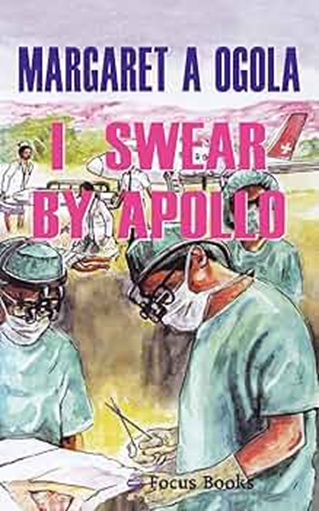
Employing medical humanities in literary analysis has exposed the humanistic side of illness, disability as well as the reality of death and grief. Margaret Ogola, a Kenyan physician and literary icon, weaves the clinical practices of medicine and bioethics with a humanistic spatioscape that then interrogates the ontological intricacies of disability, illness, and death. Across her dual oeuvres—The River and the Source (1994) and I Swear by Apollo (2002)—she constructs a narrative framework that illuminates disease, death and faith and, in this article’s focus, disability and its attendant intersections. While in The River and the Source, patriarchy and the struggle for women’s emancipation from the pre-colonial through the postcolonial is a reverberating theme, I swear by Apollo transports the reader to the turn of the century and explores questions of identity, career, and medical humanities in the now mucky political climate. Building on Charles Rono’s scholarship on Ogola’s medical-humanistic motifs and using the Kübler-Ross’s five-stage model of grief, this paper traces the (non-linear) diagnosis, suffering, and eventual death of Daniel Odero Sigu; the disabled son of Wandia and Aoro. Despite their background in medicine, his parents are rendered powerless in the face of his terminal condition and cannot help him subvert this condition, but instead have to watch him suffer and die. Through Daniel Sigu, Ogola not only humanizes the clinical projections of Down syndrome and the resultant dis/ability, but also mobilizes faith, family, and existential inquiry, thus underscoring the spiritual if not emotional contours of grief in Kenya’s modernity.
 Introduction