
It is the beginning of the most difficult and intense school terms, and the year is somewhere around 2010. My brother Oscar and I dreaded term 2s of all terms simply because it presented the most challenges a young teenager could ever fathom. It was a period when our fortitude and resilience would be put to the test, and we had to gather all the energy and positivity we could afford in the last weeks of April before term 2 began. Term 2 runs from May to August and at the time, we did not have mid-term breaks. We only had visiting days in which a guardian or a sibling would visit the school premises twice to follow up on our academic performances. We had already spent one year at All Saints Kamoiywo preparatory boarding school located in Kabiyet, Nandi County about 60 kilometers off Eldoret and about 80 kilometers from home.
Weather in this region is predominantly divided into two: the rainy: from April to August, and the sunny season August to march. As we were growing up, the timing of these seasons was in a way predictable and this played to the advantage of the farmers, my family being one, to determine the suitable time to grow either Wheat or Maize on the about 20 hectares of farm. Well, wheat to the best of my knowledge was and still is highly precarious because of the inconsistent market trends and the unpredictability that came with it. As my mother often puts it “Ng’ano ikikukubali imekukubali” loosely translates to the unpredictability of the outcome of wheat. Particularly a big nightmare is the infamous weed that grows like grass in between wheat making it difficult for the wheat to thrive and also difficult for harvesting. There was also the trend of overproduction whereby almost all farmers (without their knowledge) planted wheat for the season amid hopes and rumors that the following year was going to be kind and generate huge fortunes in the national market. Well, more often than not, the produce had to lay in silos and stores to allow for circulation and create demand thus increasing the price. This as I came to understand was a risky affair as no one knew when the prices would go up and the financial demands did not care at all. Money, especially in such a micro-economy, demanded cash at hand and less liquid investments.
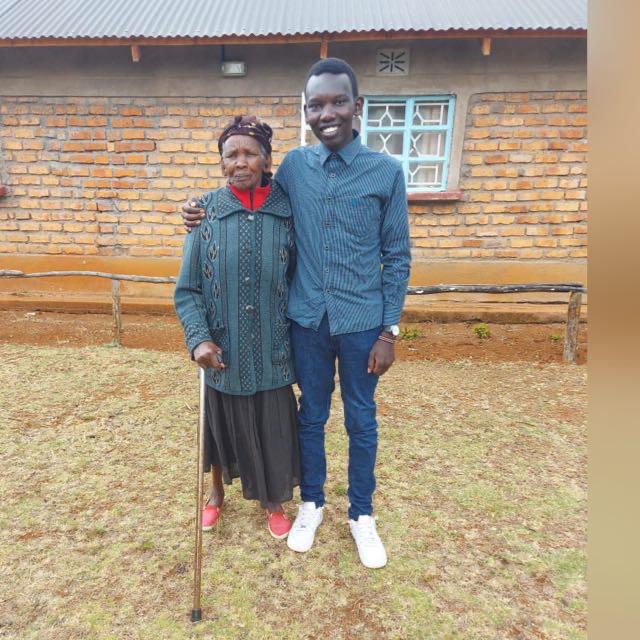
But today is not about subsistence and commercial farming. I am not a huge expert in this field and the little knowledge I have acquired is based on observations. But what I want to talk about today is the story of a Matriarch, whose story I believe needs to be heard. Such stories tend to be forgotten easily and I believe in the spirit of rewriting stories about Africa, we need to also find a bridge and record that which was never recorded. My grandmother, Magdalene Taprandich Sikowei Cheruiyot is the subject of today’s article. She lived in the years (birth year approximately) from 1932- 2023. I did not gather so much about her life in light of colonialism and post-independence Kenya and much about the subject, I managed to hear from my late grandfather Charles Chepsiror (1924-2020) of whom I will write some other time. It would have been an interesting odyssey to venture into her life as a young girl, growing up in the hilly regions of the north-rift. Were her ambitions in a way similar to those we have today? Was she confronted with the idea of striving to build a life that is better and fulfilling, just like we all do today?
The answer to these lies in my interactions with her and this memoir serves as a mirror to reflect on the ideologies she probably held during her teenage and youthful life. For all I know, she was the most hardworking person I have ever met. In many ways, I think this is emblematic of the most matriarchal figures I know in my life, who in many ways have sacrificed a lot of their time and dedicated their entire life to production and service. After doing some travels and interacting with other cultures, I realize that the women in my milieu who lived in the times of pre- and post-independent Kenya, have to contend with the idea of industrious labor. Their fortitude for subsistence farming, which is a profession most of them would have to take if they were not accorded the chance to go to school, is way unmatched. This is not in any way to mention that men, were just mere idlers who sat around and waited for women to work. Not at all. I recognize the dual responsibility that women had to take namely: providing subsistence to the family through farming vegetables, and fruits, rearing chicken, herding sheep, milking cows, cooking, and ensuring that all the demands of the household chores were done. That meant that most of the farming they engaged in did not generate as much financial income as one would imagine but would ensure that households did not go hungry and that they had food in stock come what may. That was the primary purpose as to why they did what they did.
The opening of the second school term was a melancholic one, because for one, it was the longest of all terms, and second it was the rainy season, which meant that it was wet and cold most of the time. As we bid everyone in the homestead goodbye, which was like a tradition, we would pass by our grandparents’ homestead and probably find grandmother sitting by the small stool in her kitchen preparing tea. The kitchen was probably smoky but after fanning the fire and burning in flames, the vision was made much better and we could then see each other. She would remark in something along the lines of “Ng’u kaoratke” my Keiyo morphology is extremely bad, and I am just writing from ear memory. This translated to “I see you are ready to leave:” we would remark “Yes we are” and she would bid us to sit down and wait for tea to be ready so we could drink with her. Most of the time, we never had the time to wait since the vehicle taking us to Eldoret town was ready, and our dad was also waiting for us. But probably in the previous days, we had already drunk tea or partaken in lunch or supper with her.
It was extremely important for my grandmother that we had enough to eat. To deny eating in her presence and home for all the obvious reasons would have meant disrespect to her. Now that I am grown up and understand how things work, that was her love language and a sign of intimacy to her grandchildren. Even when things were tough and when the rains had delayed, she always had enough for us to eat and even take. She was fond of stacking wild fruits (mbonik) in her red old jacket ready to distribute to anyone in her immediate sight. But then she would do something that was the most phenomenal and will forever remain in my memory. She would dash into her bedroom, unfold her savings, and jet out either a coin or a note. Sometimes, she had to consult with Grandpa, and she would emerge handing us a total of mostly 50 Kenya shillings each, which would serve as pocket money for the time we would be in school. She would then hug us and say (ogilgey– go work hard) and (opa ne kararan– safe travels). I need not explain the number of emotions and nostalgia I get from reflecting on such memories. I am not sure she knew exactly what we were striving for, but she believed in our cause. She believed in education however much she did not understand it herself.
Now I am doing a master’s degree far away from home and looking back, I wish I knew exactly what that meant then. I did not know that she was projecting into the future. In many ways, the direct sacrifices made by our parents, which are above and beyond and deserve agency too, are reflected in the behavior and attitudes of my grandparents toward education. The question is if a female figure, whose odds were completely against her at her time, still found refuge and comfort in Education, why shouldn’t we? If she made the little sacrifices to ensure that we felt comfortable as we pursued education, we have no excuse to. I am probably speaking from a point of privilege, and this serves as a call to institutions to reflect on the dreams and ambitions the matriarchs in our local society had toward education and how through social justice, we can achieve equality in rolling out policies that not only ensures equitable access to education but also emancipate the youth from the modern-day problem that is of unemployment. In the next article, I will explore the school experience and in particular the boarding school experience and how that served as a continuum towards excellence. I will also talk about the coming back home ritual and how we were received by our grandparents again.
 Introduction
Leave a Reply